

By Scott Isaacs, Belle Meade Jewelry & Repair, Nashville
Here's something I've noticed over a lot of years at the bench. Nobody takes a watch in for service while it's still keeping time. If it runs, it's fine. That's how most of us think about it.
People treat their rings the same way. If the ring isn't catching on a sweater and the stone doesn't feel loose, they figure everything's fine. I understand that. But a prong can be worn most of the way down and still look okay to the naked eye. By the time a ring starts snagging, the wear has usually been going on for a while.
If you'd like a quick first look without leaving the house, try our free Prong Health Check. More on that below.
How we used to keep this on people's minds
The jewelry stores of the previous generation had a saying: have your ring checked twice a year. Some of them even gave you a little card, and the jeweler would sign off each time you brought the ring in.
That card didn't mean the store would stand behind it if you lost a diamond. What it did was keep the conversation going. Twice a year, somebody who knew what to look for put your ring under a loupe and told you how it was holding up. Most people today never get that reminder.
What prongs are, and why they wear
Prongs are the little metal claws that hold your diamond in place. They're small, and they take a beating every day. They catch the edge of a desk, the car door, the steering wheel, the gym bar, and the dishwasher rack.
Prongs wear like the tread on a tire or the sole of a good pair of shoes. It happens slowly and evenly, so you don't notice it, and then one day there isn't much left.
The "hammer effect"
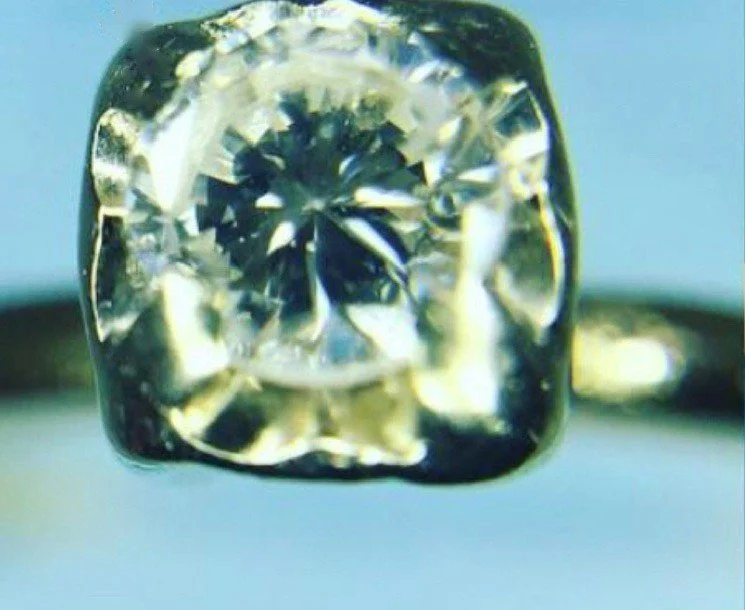
After 10 to 15 years of wear, and sometimes less, prongs start to show what I call the hammer effect.
Picture a hammer that's been in somebody's toolbox for 30 years. The striking face isn't crisp anymore. It's flattened out and mushroomed over at the edges from all those years of hitting nails. A prong does the same thing. A healthy prong has a nice rounded tip that sits over the edge of the stone. After enough bumps, that tip gets flattened down and mushroomed out to the sides. It can look like it's still covering the stone, but there's a lot less metal holding it, and what's left is thin.
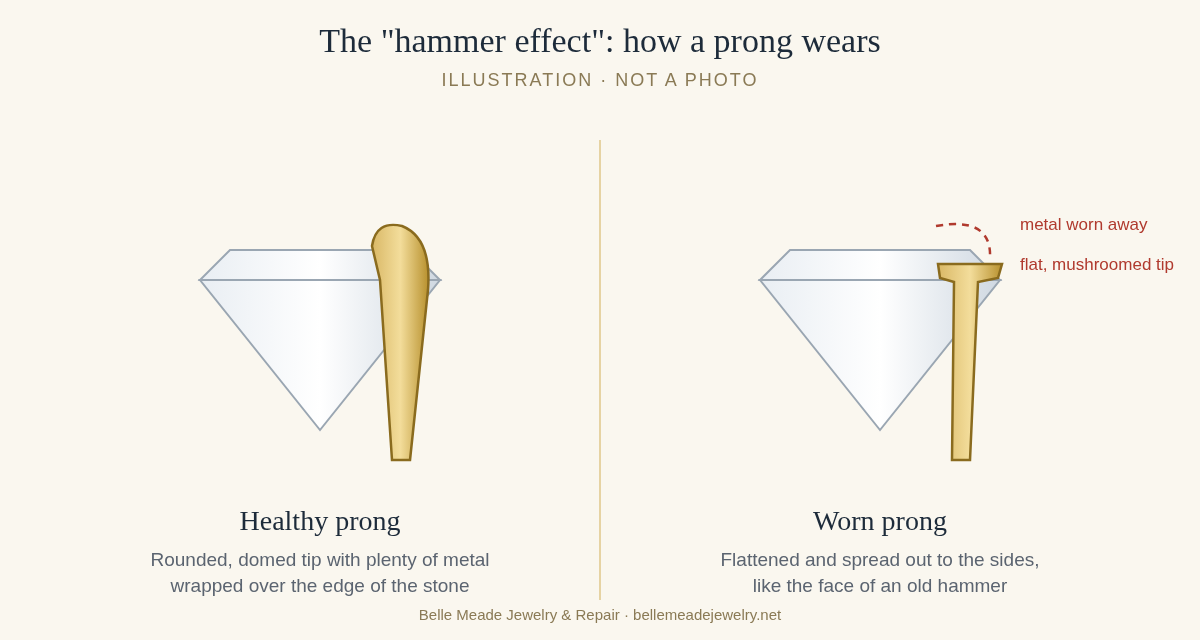
Illustration only, not a photo of a customer’s ring.
That's the stage where I'd like to see a ring. Not after it's catching on clothes, and certainly not after the stone is gone.
Why people put it off
Let's be honest. Getting your ring looked at has always been a bit of a hassle. You have to make an appointment, drive over, and give up part of your day. For something that seems fine, it's easy to keep putting off. I get it.
A free first look from home: the Prong Health Check
That's why we built the free Prong Health Check on our website. You take a few photos of your ring with your phone, answer a couple of quick questions, and the tool gives you a look at how your prongs are holding up.
I'll be straight with you about what it is. It's a tool, it isn't perfect, and it's still in beta. It doesn't replace having a jeweler look at your ring in person. But the results we've seen lately have been very encouraging. We made over 300 updates to the program before it ever went live, because I wanted it to be useful and not a gimmick.
The point of it is the same as that old sign-off card: to keep the conversation going and give you some idea of what's going on with your ring, so you can have the work done before there's a problem. That means before it's catching on clothes, and in the worst case before you lose a stone.
What happens if your ring needs work
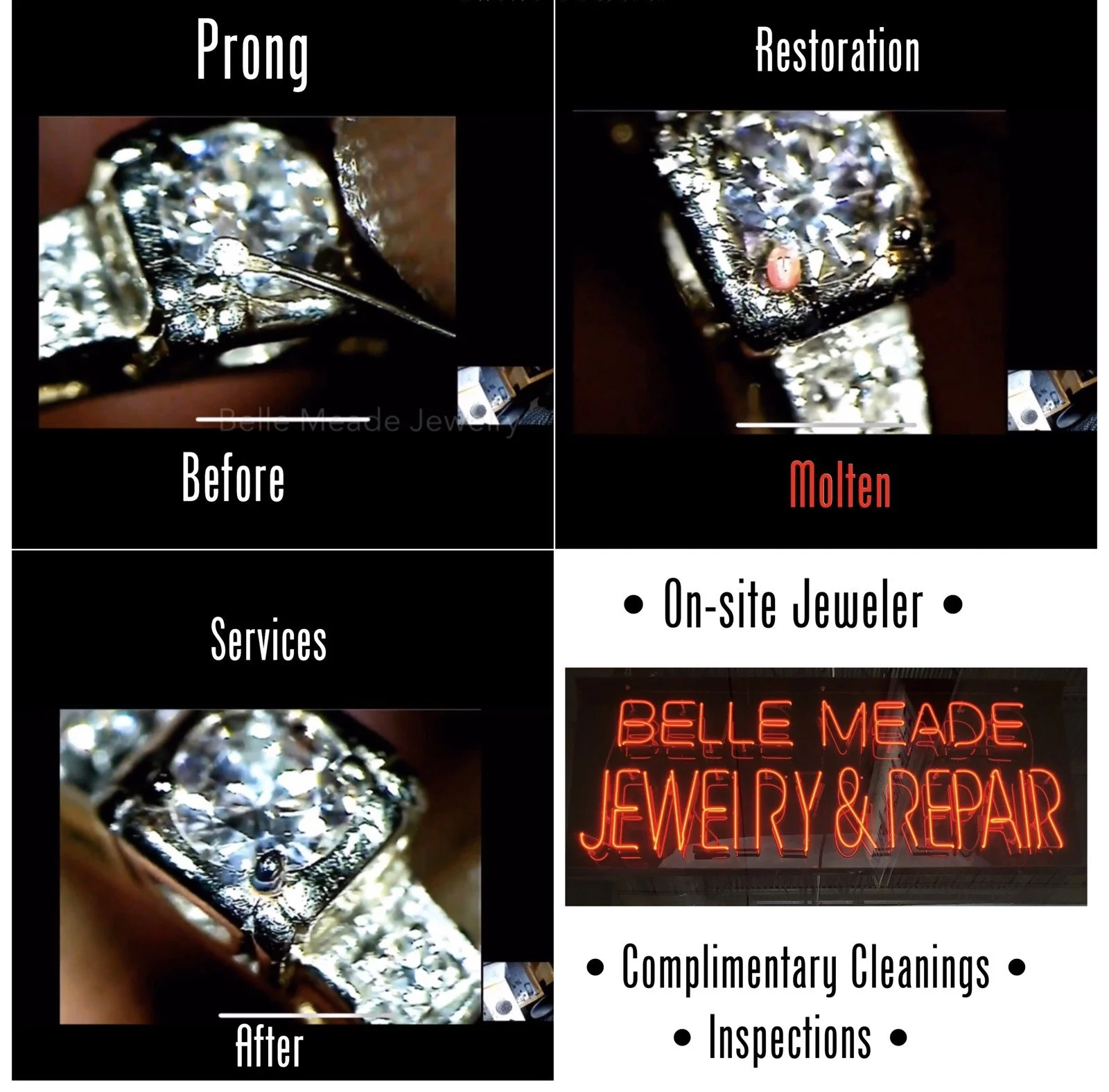
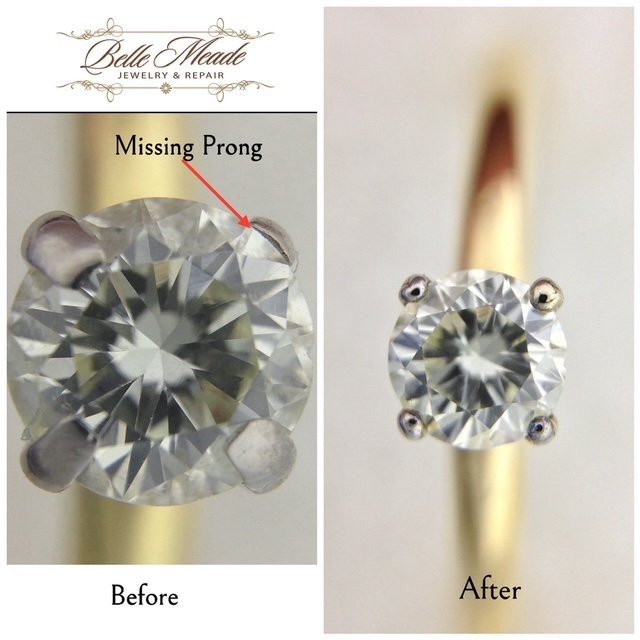
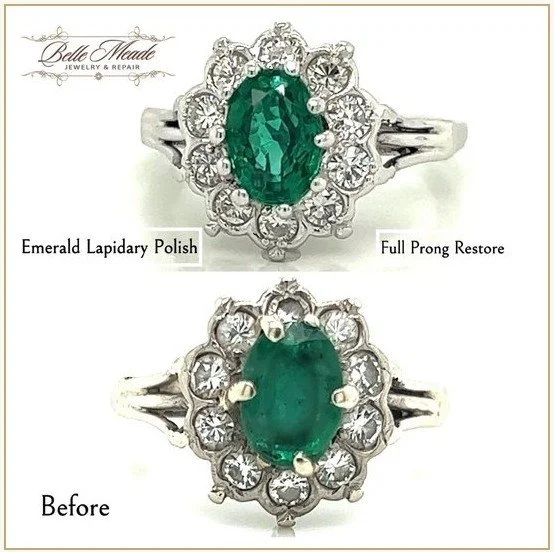
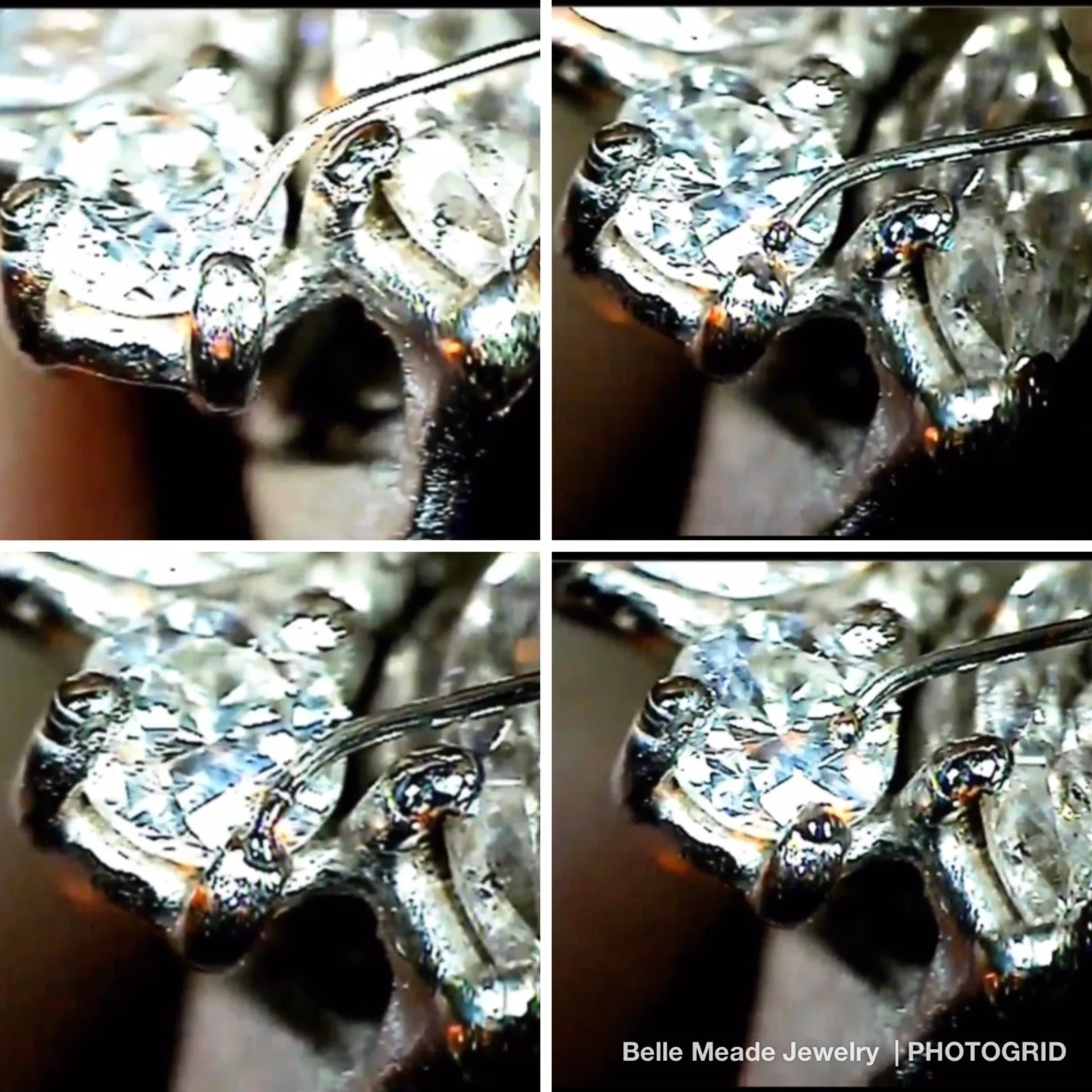
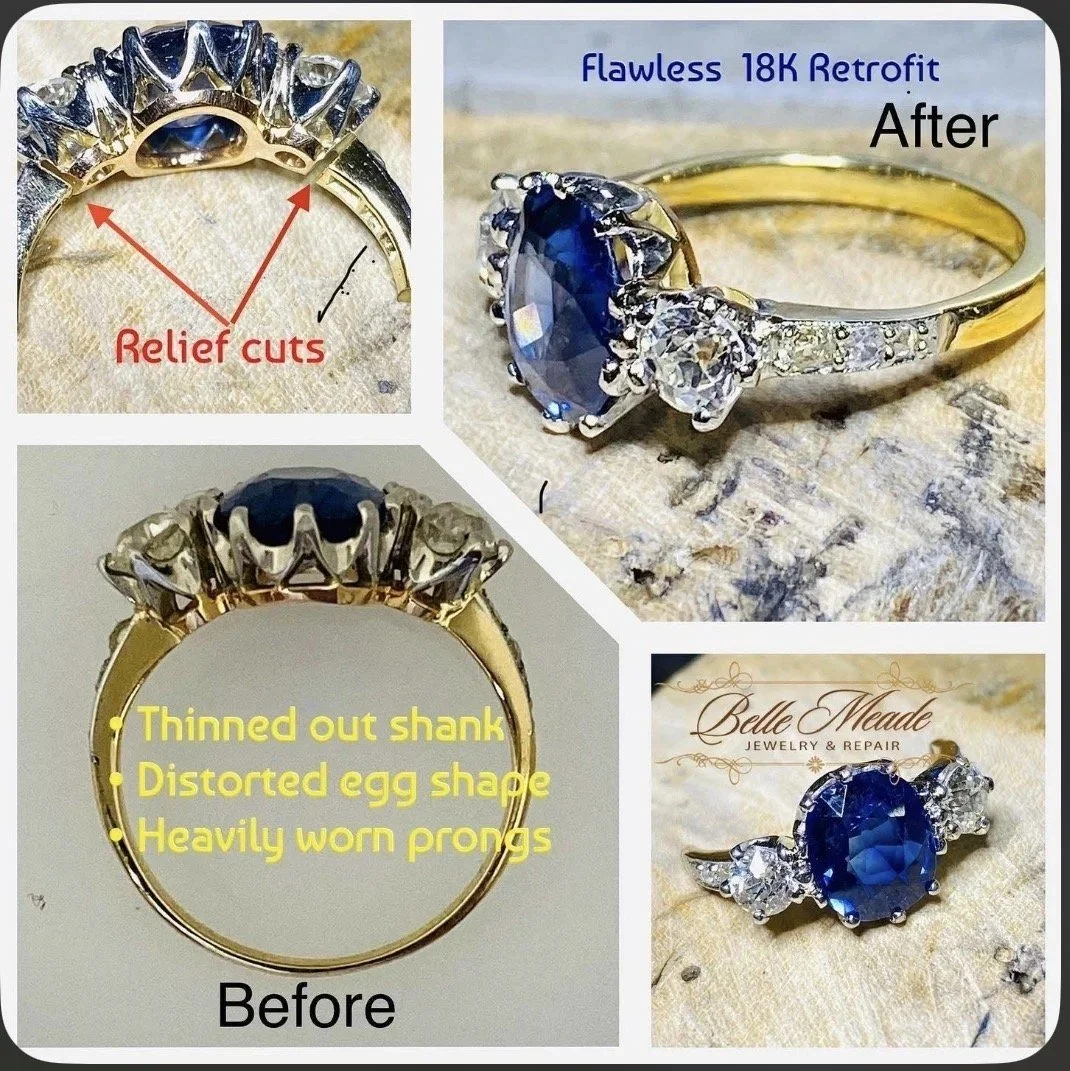
If the check, or your own eyes, tell you something's off, bring the ring in. Every repair is done right here at our bench on Harding Pike. We look at your ring together under magnification so you can see each prong for yourself, and when prongs need rebuilding, we add new metal exactly where it's needed with a laser welder.
Not in Nashville? You can mail it in
You don't have to live nearby. We have instructions for shipping your ring to us safely here: How to mail us your ring.
The short version
If a ring runs fine, people assume it is fine. Prongs don't work that way.
Prongs wear like a tire tread. After 10 to 15 years, and sometimes less, they flatten and mushroom out like an old hammer.
A ring that catches on clothing or a stone that moves means it's time to come in now.
The free Prong Health Check gives you a first look from home, and an in-person look gives you the full answer.
Check your ring today
Take the free Prong Health Check: bmj-prong-check-45f293.netlify.app
Book an in-person look: bellemeadejewelry.net/appointments, or call or text 615-269-3288
Mail your ring in: instructions here
Belle Meade Jewelry & Repair
4515 Harding Pike Ste 112, Nashville, TN 37205
615-269-3288 · bellemeadejewelry.net
Don't wait for it to catch. Check it while it's still keeping time.
